Archives
- 2026-04
- 2026-03
- 2026-02
- 2026-01
- 2025-12
- 2025-11
- 2025-10
- 2025-09
- 2025-03
- 2025-02
- 2025-01
- 2024-12
- 2024-11
- 2024-10
- 2024-09
- 2024-08
- 2024-07
- 2024-06
- 2024-05
- 2024-04
- 2024-03
- 2024-02
- 2024-01
- 2023-12
- 2023-11
- 2023-10
- 2023-09
- 2023-08
- 2023-07
- 2023-06
- 2023-05
- 2023-04
- 2023-03
- 2023-02
- 2023-01
- 2022-12
- 2022-11
- 2022-10
- 2022-09
- 2022-08
- 2022-07
- 2022-06
- 2022-05
- 2022-04
- 2022-03
- 2022-02
- 2022-01
- 2021-12
- 2021-11
- 2021-10
- 2021-09
- 2021-08
- 2021-07
- 2021-06
- 2021-05
- 2021-04
- 2021-03
- 2021-02
- 2021-01
- 2020-12
- 2020-11
- 2020-10
- 2020-09
- 2020-08
- 2020-07
- 2020-06
- 2020-05
- 2020-04
- 2020-03
- 2020-02
- 2020-01
- 2019-12
- 2019-11
- 2019-10
- 2019-09
- 2019-08
- 2019-07
- 2019-06
- 2019-05
- 2019-04
- 2018-07
-
The CysLT receptor antagonist BayCysLT RA significantly supp
2020-05-08
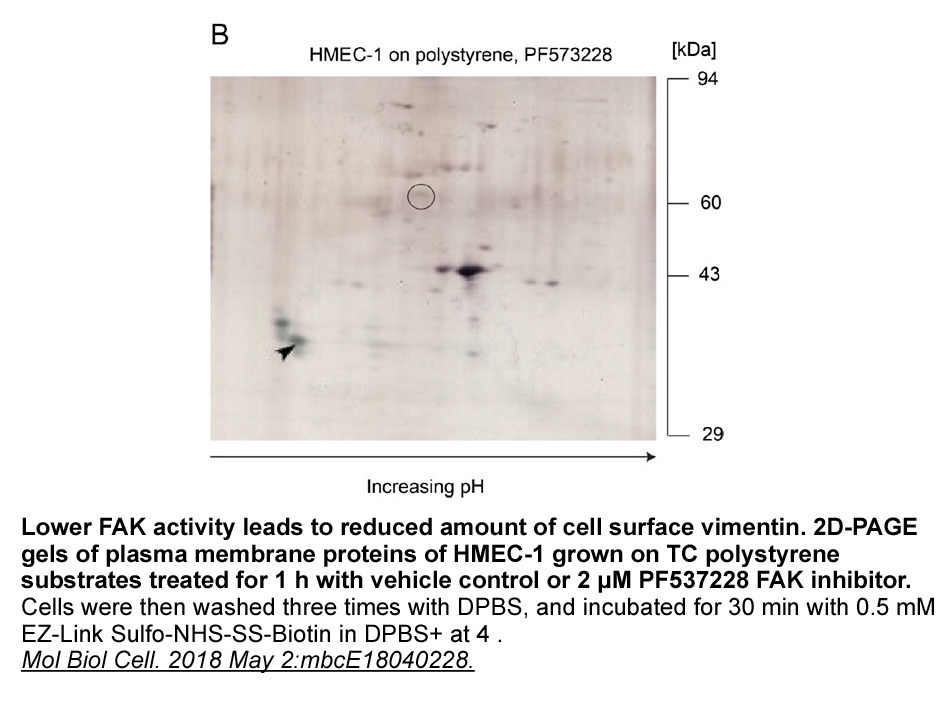
The CysLT2 receptor antagonist BayCysLT2RA significantly suppressed multiple antigen challenge-induced infiltration of eosinophils and mononuclear BMH-21 into the lung, indicating that CysLT2 receptor activation is involved in leukocyte migration. In contrast to the present finding, Barret et al. [
-
CysLTs trigger contractile and inflammatory processes throug
2020-05-08

CysLTs trigger contractile and inflammatory processes through the specific interaction with cell surface receptors belonging to the rhodopsin family of the G protein-coupled receptor (GPCR) genes. Until now, two receptor subtypes have been cloned, namely CysLT1 and CysLT2[8]. In particular, when the
-
Substitutions on the benzene ring of the phenyl acetic
2020-05-08
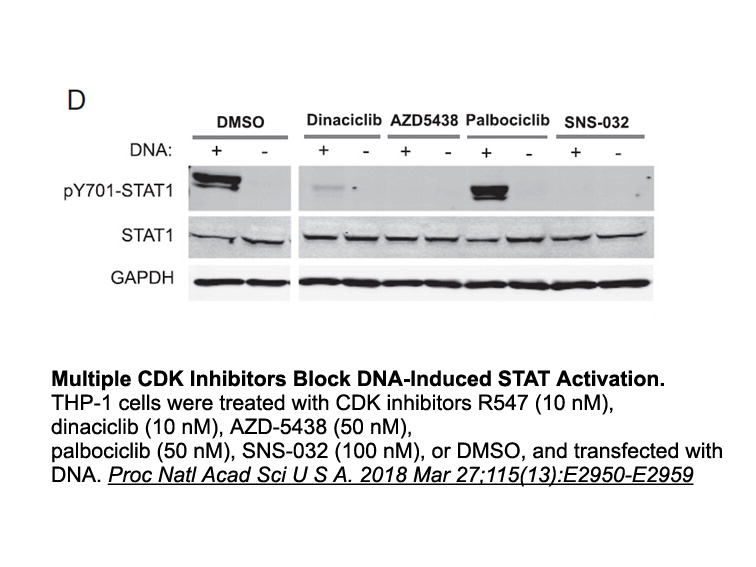
Substitutions on the benzene ring of the phenyl acetic Ro 61-8048 moiety were evaluated to study their effect on DP and CRTH2 selectivity (). Compound has strong affinity for CRTH2, but it only has moderate affinity for DP. Small substitutions such as methoxy () and fluorine () next to the aryloxy
-
Moreover the vibrational contributions provide a plausible e
2020-05-08
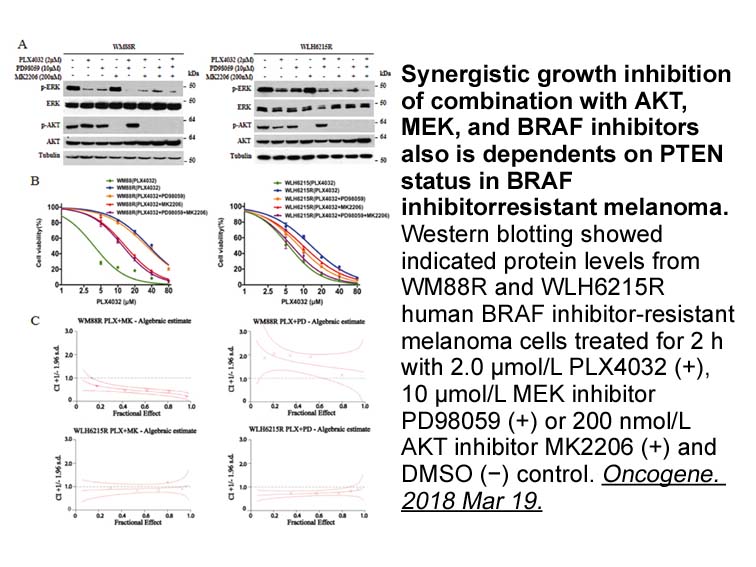
Moreover, the vibrational contributions provide a plausible explanation for the missing X′ peaks in the experimental PES for the Er and Tm complexes. The current SO-MCQDPT2 (Fig. 1(k) and (l)) and MCQDPT2 II (Fig. 2(k) and (l)) calculations suggest the appearance of peak splittings for these complex
-
The heterogeneity among studies that investigated the associ
2020-05-08
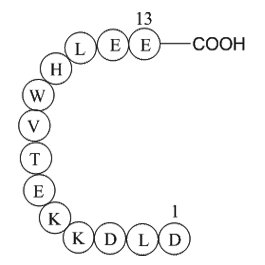
The heterogeneity among studies that investigated the association of COMT Val158Met with alexithymia was also significant (Ham et al., 2005; Min et al., 2016; Swart et al., 2011; Zekioglu et al., 2014). The healthy status, drug effect, and other demographic variables also influenced one\'s ability o
-
MNs can be obtained from
2020-05-08

MNs can be obtained from iPSCs, using signaling molecules such as retinoic biotin-LC-LC-tyramide (RA) and Sonic hedgehog (Shh) (Table S1).4, 5, 12, 23, 24, 25, 26, 27, 28, 29 These methods rely on developmental principles and require changing the combinations of signaling molecules at multiple steps
-
br Introduction Hematopoietic stem cells
2020-05-08
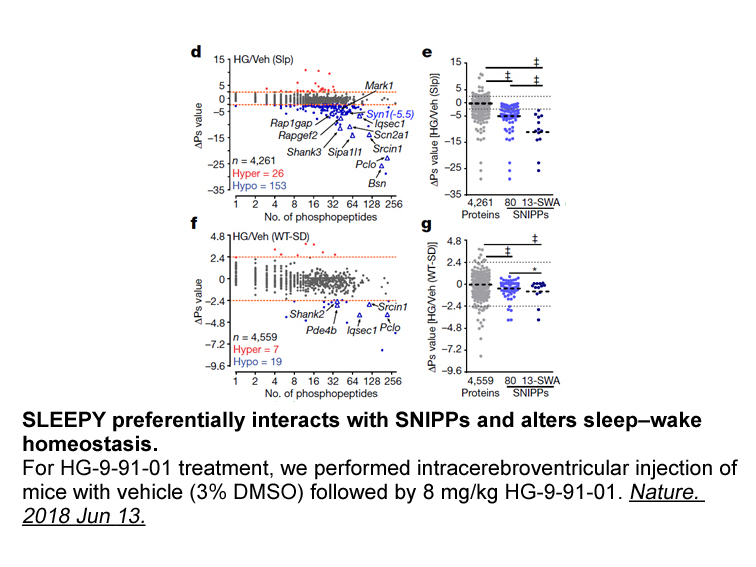
Introduction Hematopoietic stem Cy5 maleimide (non-sulfonated) and leukemic stem cells (HSCs and LSCs, respectively) both have a capacity of self-renewal. Whereas HSCs give rise to all blood lineages during lifetime hematopoiesis, LSCs are responsible for the initiation and propagation of leukem
-
br Conclusions br ISG is an ubiquitin like protein that
2020-05-07
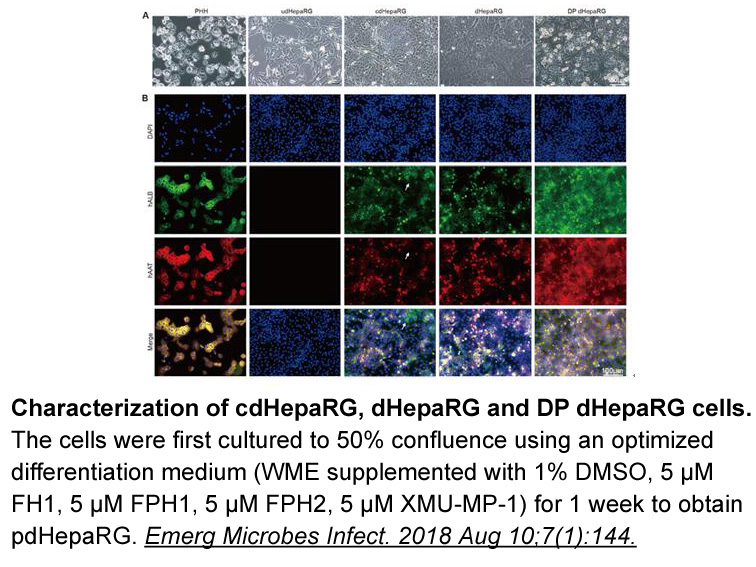
Conclusions ISG15 is an ubiquitin‐like protein that is induced by treating mammalian indacaterol with interferon‐α/β. UbE1L was identified as the E1‐activating enzyme for ISG15 in the course of experiments that demonstrated that the nonstructural or NS1 protein of influenza B virus inhibits IS
-
br Rationale Recently we have shown that
2020-05-07
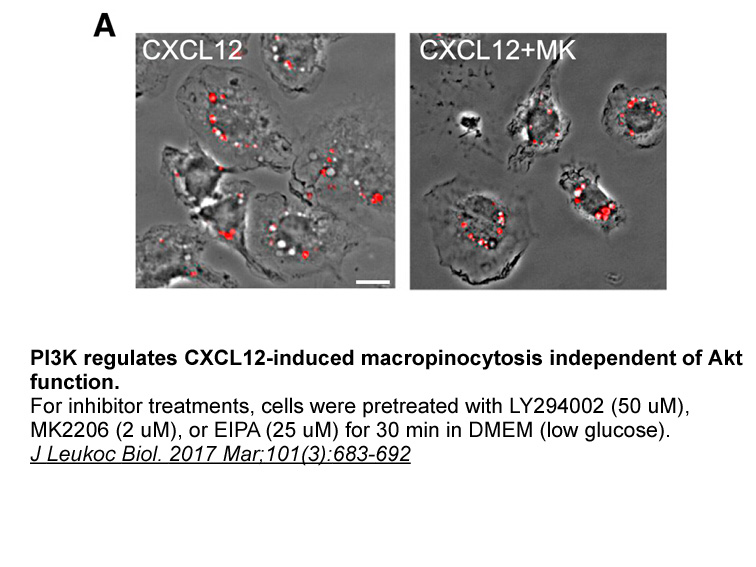
Rationale Recently we have shown that the nasal CysLT2 receptor localized exclusively in blood vessels and the expression level of the CysLT2 receptor in patients with nasal allergy was higher than that in patients with non-allergic rhinitis (Shirasaki et al. Allergol Int 2013). We hypothesized t
-
A variety of fused membered ring chemotypes have arisen such
2020-05-07
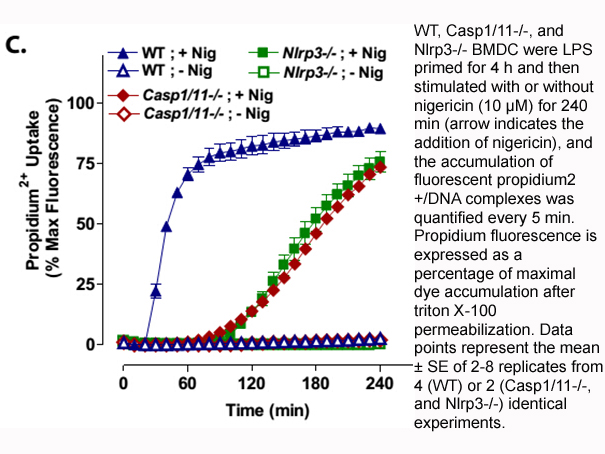
A variety of fused 6–5-membered ring chemotypes have arisen such as 7-azaindole acetic acids, benzimidazolyl acetic acids, spiro-indolinone acetic acids, and indolizine acetic acids, however, to the best of our knowledge, fused 5,5-membered ring systems have not been reported. Prostaglandin D (PG
-
On the basis of the
2020-05-07
On the basis of the findings described above, a series of heterotricyclic analogs were designed and synthesized. The human CRF1 receptor binding and antagonist activity data for newly designed heterotricyclic core antagonists 28–33 are described in Table 3. Most of the tricyclic core analogs listed
-
br GRAIL family Gene related
2020-05-06
GRAIL family Gene related to anergy in lymphocytes protein (GRAIL, encoded by Rnf128 gene) is a transmembrane RING-type E3 ligase involved in T cell anergy and tolerance, and also regulation of retinoic acid receptor cytoskeletal organization [52]. This E3 was initially identified in CD4+ T helpe
-
A previous report demonstrated that DA dependent
2020-05-06
A previous report demonstrated that DA-dependent oxidative stress may be the initial event in MA neurotoxicity (Cubells et al., 1994). Oxidative burdens at early stage might be a prerequisite for neurotoxic scenarios induced by 3-FMA, and they are in line with MA case (Shin et al., 2012, Shin et al.
-
To date many studies have reported significant aberrant
2020-05-06

To date, many studies have reported significant aberrant methylation patterns in TIMPs in various types of cancer aromatase inhibitor [[16], [17], [18]]. However, little has been reported on the events that lead to the methylation of TIMPs in the UV-irradiated human skin. Therefore, the objective of
-
DNA damage represents a persistent threat to genomic stabili
2020-05-06
DNA damage represents a persistent threat to genomic stability. A critical link exists between DNA mutation, chromosomal rearrangement and cancer development. In myeloid malignancies, various chromosomal translocations and/or mutations increased cellular reactive oxygen species (ROS), followed by DS
16346 records 890/1090 page Previous Next First page 上5页 886887888889890 下5页 Last page