Archives
- 2026-04
- 2026-03
- 2026-02
- 2026-01
- 2025-12
- 2025-11
- 2025-10
- 2025-09
- 2025-03
- 2025-02
- 2025-01
- 2024-12
- 2024-11
- 2024-10
- 2024-09
- 2024-08
- 2024-07
- 2024-06
- 2024-05
- 2024-04
- 2024-03
- 2024-02
- 2024-01
- 2023-12
- 2023-11
- 2023-10
- 2023-09
- 2023-08
- 2023-07
- 2023-06
- 2023-05
- 2023-04
- 2023-03
- 2023-02
- 2023-01
- 2022-12
- 2022-11
- 2022-10
- 2022-09
- 2022-08
- 2022-07
- 2022-06
- 2022-05
- 2022-04
- 2022-03
- 2022-02
- 2022-01
- 2021-12
- 2021-11
- 2021-10
- 2021-09
- 2021-08
- 2021-07
- 2021-06
- 2021-05
- 2021-04
- 2021-03
- 2021-02
- 2021-01
- 2020-12
- 2020-11
- 2020-10
- 2020-09
- 2020-08
- 2020-07
- 2020-06
- 2020-05
- 2020-04
- 2020-03
- 2020-02
- 2020-01
- 2019-12
- 2019-11
- 2019-10
- 2019-09
- 2019-08
- 2019-07
- 2019-06
- 2019-05
- 2019-04
- 2018-07
-
The glycolytic pathway is a
2019-11-06

The glycolytic pathway is a catabolic route that ends with the synthesis of pyruvate (Pyr). In Arabidopsis embryos, the conversion of phosphoenolpyruvate (PEP) to Pyr, catalyzed by pyruvate kinase (PK), is mainly located in the plastids [10], [11]. The preceding reaction is catalyzed by enolase (ENO
-
br Introduction The allergic response is a complex process
2019-11-05

Introduction The allergic response is a complex process involving the interaction of several mediators; among these, cysteinyl leukotrienes (CysLTs) represent one of the most important actors in the pathogenesis of airway allergic diseases such as allergic rhinitis and asthma [1]. Pharmacological
-
Introduction Piperine is a pungent alkaloid and accounts
2019-11-05
Introduction Piperine is a pungent alkaloid and accounts for 2–5% dry weight in black and white peppers (Butt et al., 2013). Physiological benefits of piperine have been a subject of extensive research in recent years. Piperine is an antioxidant with strong anti-inflammatory and antiangiogenic acti
-
Notably we demonstrated that EP EP receptor
2019-11-05

Notably we demonstrated that EP2/EP4 receptor-coupled activation of the cAMP signaling pathway accounted for both up-regulation of COX-2 and down-regulation of LOX, which is consistent with the roles of the cAMP signaling pathway in regulation of COX-2 and LOX by PGE2 in a number of other tissues or
-
In the present work we ask
2019-11-05

In the present work, we ask whether rNMP incorporation is an evolutionarily conserved property of DNA synthesis in Archaea. For this purpose, we used the best characterized hyperthermophilic anaerobe, Pyrococcus abyssi GE5 [47]. This strain duplicates its genome as fast as Bacteria, supported by euk
-
The inhibition of DNMT using AZA dC or DNMT
2019-11-05
The inhibition of DNMT1 using 5-AZA-dC or DNMT1 siRNA increased TIMP2 protein and mRNA expression, suggesting that TIMP2 expression is down-regulated by DNA methylation in the HDFs. In addition, 5-AZA-dC treatment led to a dose-dependent decrease of DNMT1 protein expression. 5-AZA-dC is a cytosine a
-
DUBs are involved in cell cycle regulation
2019-11-05

DUBs are involved in Cabazitaxel regulation and DNA damage pathways and since, in cancer and different stress conditions all the proteins which regulate cell cycle and DNA damage/repair are either up/down regulated (Singh et al., 2013, Singh et al., 2011, Kumar and de Massy, 2010, Gupta et al., 2010
-
nucleoside analogs Abrahamson and coworkers recently demonst
2019-11-05
Abrahamson and coworkers (2009) recently demonstrated a distinct role of the podocyte in preservation and production of mature GBM-components such as α3/4/5(IV)-chains. This group further verified that collagen receptors (integrins) are linked to the nucleoside analogs of podocytes. In accordance to
-
glucose transporter Plants Cp are widely distributed in the
2019-11-05

Plants Cp are widely distributed in the plant kingdom and are believed to act as virulence/defense factors for both hosts and pathogens. Cp are also found in plants, animals and bacteria and are known to be virulence factors involved in bacterial pathogenicity [29]. Further, Cp are involved in pepti
-
Acknowledgments br Prostaglandin D PGD plays a key
2019-11-05

Acknowledgments Prostaglandin D (PGD) plays a key role in mediating allergic reactions such as those seen in asthma, allergic rhinitis, atopic dermatitis and allergic conjunctivitis. PGD is the major cyclooxygenase product formed and secreted by activated mast cells and its levels in bronchoalveo
-
The mammalian two hybrid results described
2019-11-05
The mammalian two-hybrid results described above were all obtained in 293T cells, and thus the higher RLU observed specific to the hCrm1 fusion could be consistent with human Heparin having an unknown activator that interacts with hCrm1 HEAT repeat 9A and somehow facilitates Crm1-Rev/RRE function.
-
No effect on the A production by secretase
2019-11-05
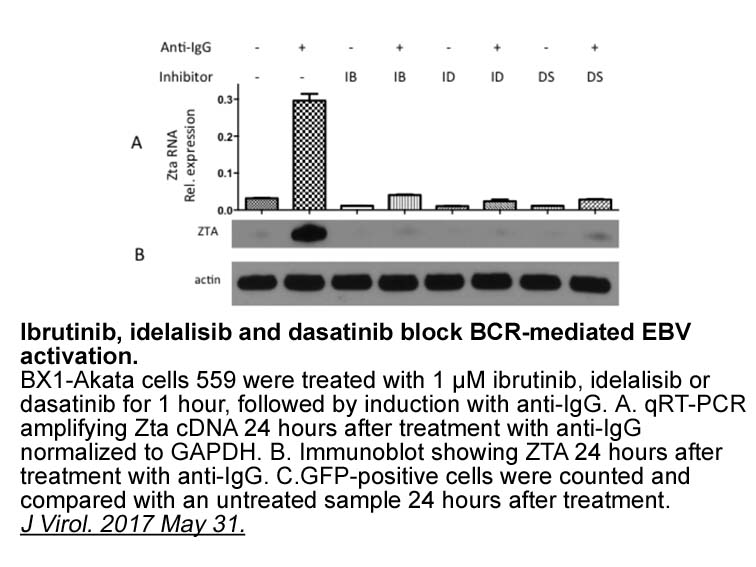
No effect on the Aβ production by γ-secretase was observed at 50μM, the highest effective concentration used in cultured Saxagliptin by the study of Flajolet et al. IC261 did also not exert a modulatory effect on the production of Aβ, Aβ and Aβ species in the cell-free assay at this concentration.
-
Metoprolol Succinate sale Our data also showed that D dopami
2019-11-04
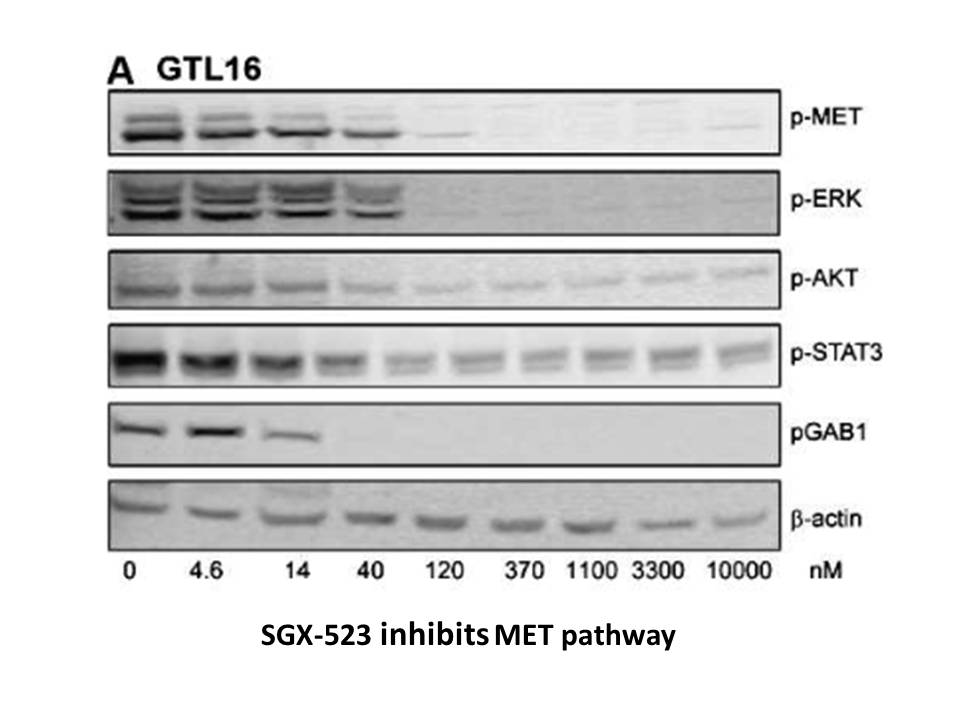
Our data also showed that D2 dopamine receptor was down-regulated in the hippocampus, NAc and striatum of F1-MEP animals, which was only significant in the hippocampus. Both agonists and antagonists of D2 dopamine receptor are able to decrease heroin self-administration (Hemby et al., 1996; Rowlett
-
Cefotaxime sodium salt receptor Many studies have also demon
2019-11-04
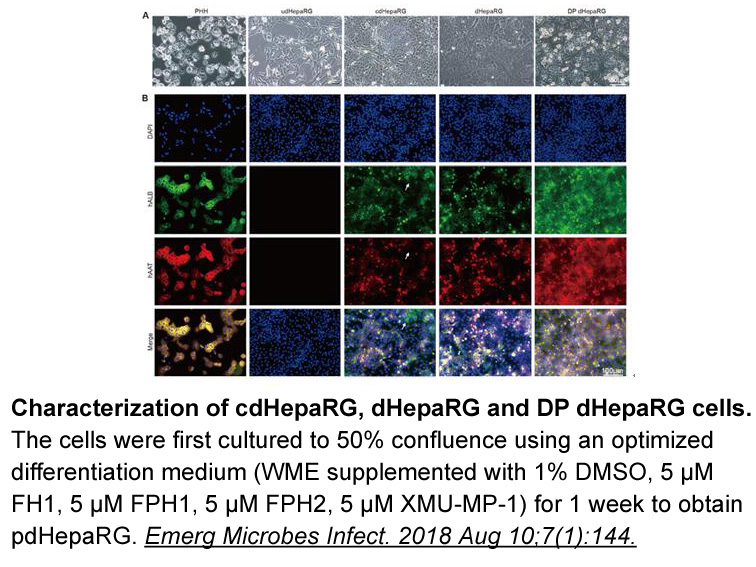
Many studies have also demonstrated that CK2 inhibition profoundly affects the PI3K/AKT pathway in different cancer models; promising results have been obtained in hematological malignancies (Buontempo et al., 2014, Borgo et al., 2013, Piazza et al., 2012, Cheong et al., 2010, Gowda et al., 2016), a
-
Emi protein consists of an N terminal regulatory region and
2019-11-04

Emi2 protein consists of an N-terminal regulatory region and a C-terminal functional region. The C-terminal region contains a destruction box (D-box), which likely competes with APC/C substrates (including cyclin B) for APC/C binding, and a zinc-binding region (ZBR), which somehow inhibits APC/C ubi
16344 records 983/1090 page Previous Next First page 上5页 981982983984985 下5页 Last page